
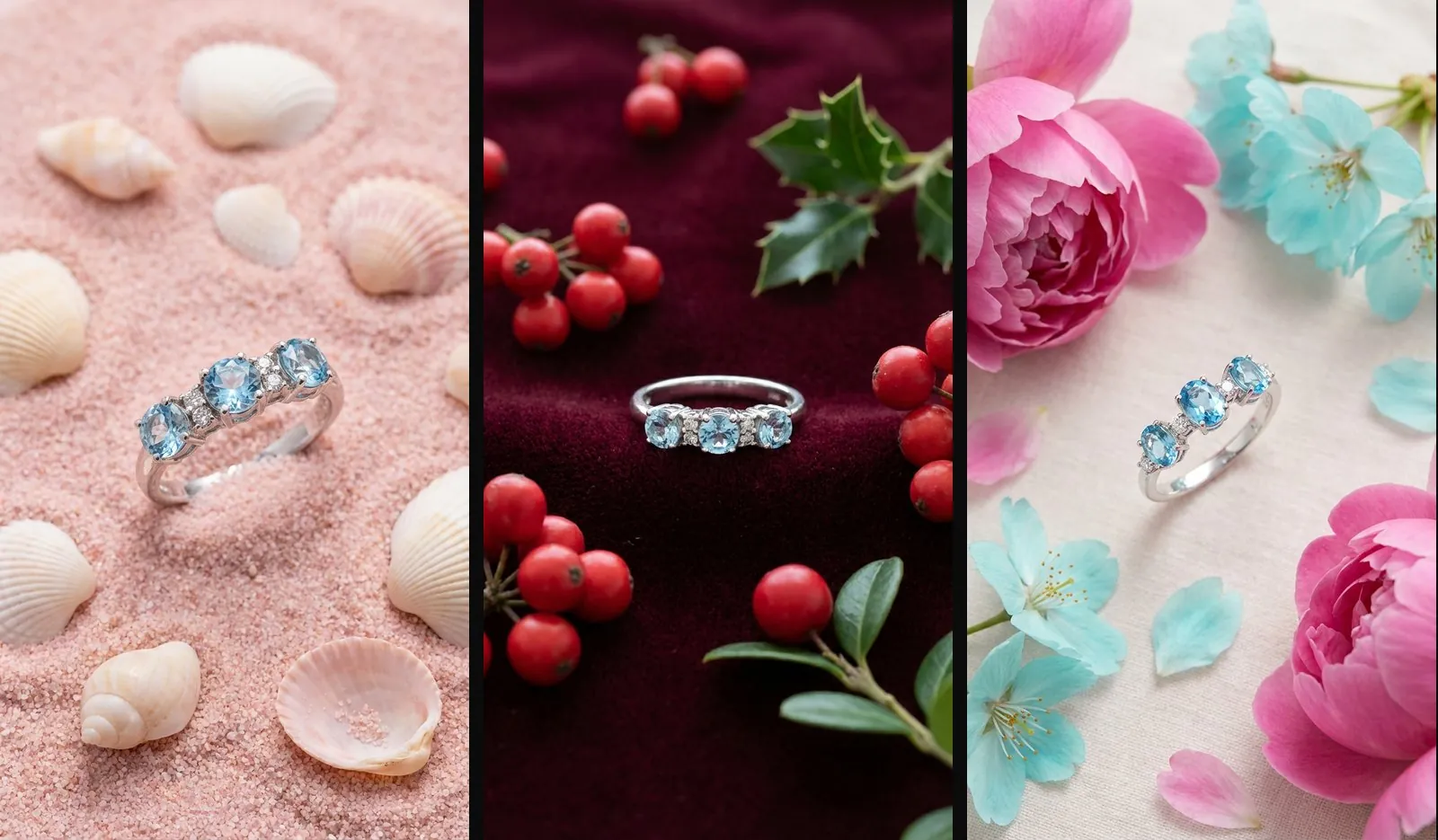
Still life is the photography of an inanimate object, arranged and lit with care, with no people in the frame. In online retail it is how a product is shown on its own, on the page where the customer buys and in advertising, and for many stores it is the only image the customer sees before deciding. That is why a product still life has to look professional: when it does not, the customer does not trust the seller. This article covers the most common types of still life in online retail, with examples, how they are made in a studio and how to get them with artificial intelligence on Seedboard.
The four most common types of product still life, with examples
Depending on the product and the purpose, every online store uses one or more of these four.
- On a white background. The product on its own, against white or neutral, with no heavy shadows and nothing around it. This is the still life of the page where the customer buys and the standard most marketplaces ask for, because it shows the item as clearly as possible and keeps the catalog uniform.
- In a setting. The product in context: a perfume on a bathroom shelf, a mug on a wooden table by the window, a pair of glasses on a desk. It is for the website, social media and advertising, because it helps the customer picture the product in their own life.
- From above, the flat lay. The product seen from overhead, arranged on a surface together with other matching objects. It is the type used most for sets, pairings and social content, because it shows several items in one tidy image.
- Textured. The product resting on a surface that echoes its world: marble for a cosmetic, wood for a handmade object, fabric for a piece of jewelry. It communicates the quality and the positioning of the product before the price does.
How still life photography of objects is made in a studio
In a studio, still life is patient work. The photographer builds a set with the chosen background, arranges the lights, usually two or three sources with panels to soften them, cleans dust and fingerprints off the product, positions it and repositions it until the reflections and the shadows fall where they should, and repeats the whole thing for every angle and every product. A shiny product, such as a glass bottle or a piece of jewelry, can take hours for a single shot, because it reflects everything around it.
The shot, though, is only half the work. After the shoot every photo goes into retouching: the product is cut out from the background, specks of dust, scratches and unwanted reflections are removed, colors are corrected to match the real ones, brightness and background are made consistent from shot to shot, and the images are resized into the formats the store and the marketplaces require. For a catalog of a few dozen products, retouching often takes more hours than the shoot itself, and it has to be done again for every new session.
A live product shoot costs roughly 500 to 5,000 euro, plus preparing and shipping the products to the studio. The work comes back every time new products arrive, and two shoots months apart rarely come back with identical light and framing.
How to get a still life with AI on Seedboard
Seedboard generates professional photography for brands. A still life here costs no shipping, no studio booking and no set: the whole thing happens in three steps.
- Upload the product. The images of the product go in, along with the style you are after: either a reference image or a description of the mood, the light and the surface you have in mind.
- First photo. Seedboard returns one photograph. You judge it as you would a test shot on set and approve it when it is right.
- Other angles. The rest of the series is built from the approved shot and inherits its light, background and style. One approval, a full set, no rebuilding the set for each angle.
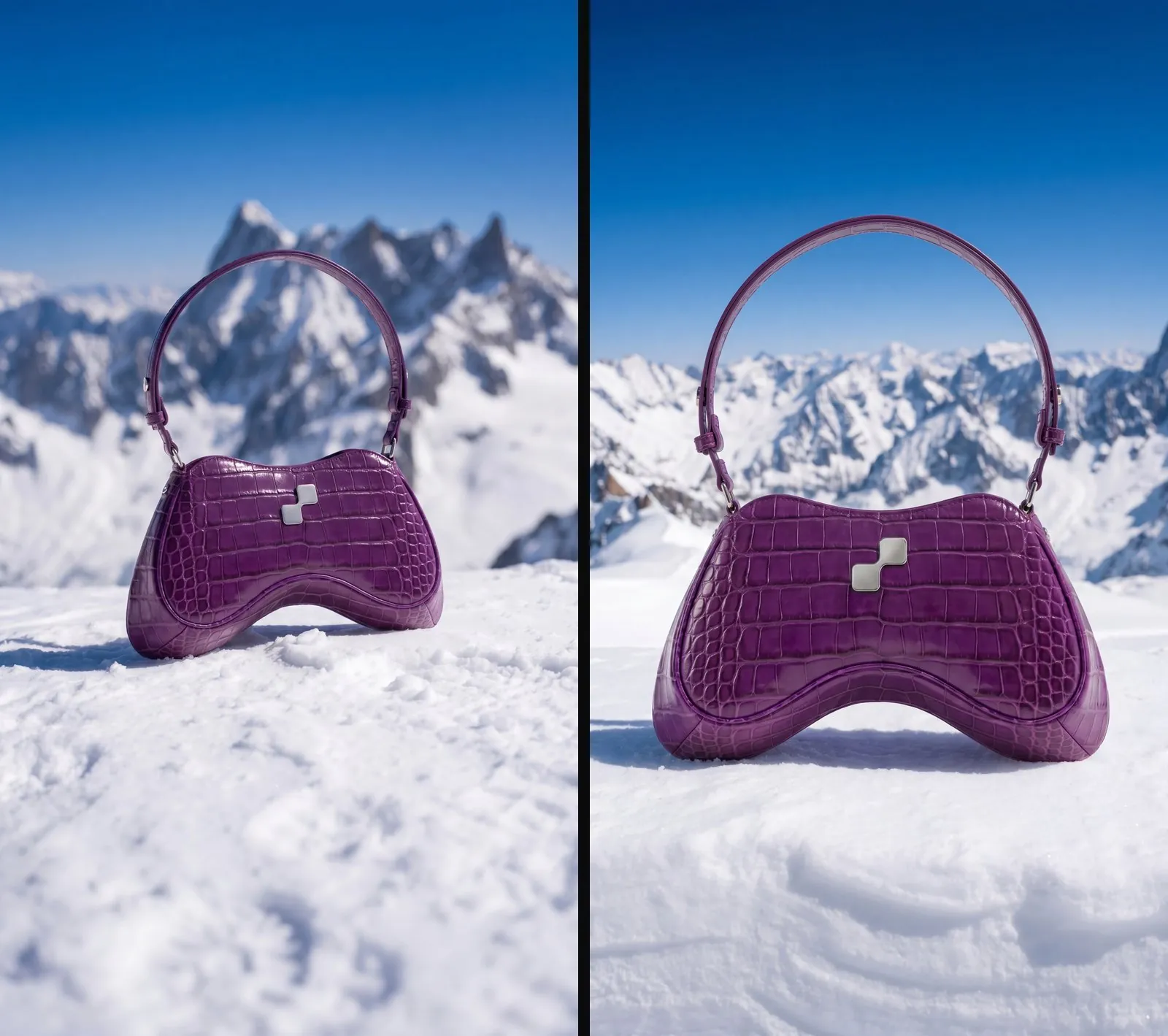
Nothing here asks you to write a prompt. You work by looking, the way you would judging shots on a set, and Seedboard composes the technical instructions underneath.
The same still life across the whole catalog
The biggest advantage of AI in still life shows when there are many products. In a studio every product is a set of its own; on Seedboard every job starts from a reference photo you approve, and the images that follow are generated to match it. There are three features for the catalog.
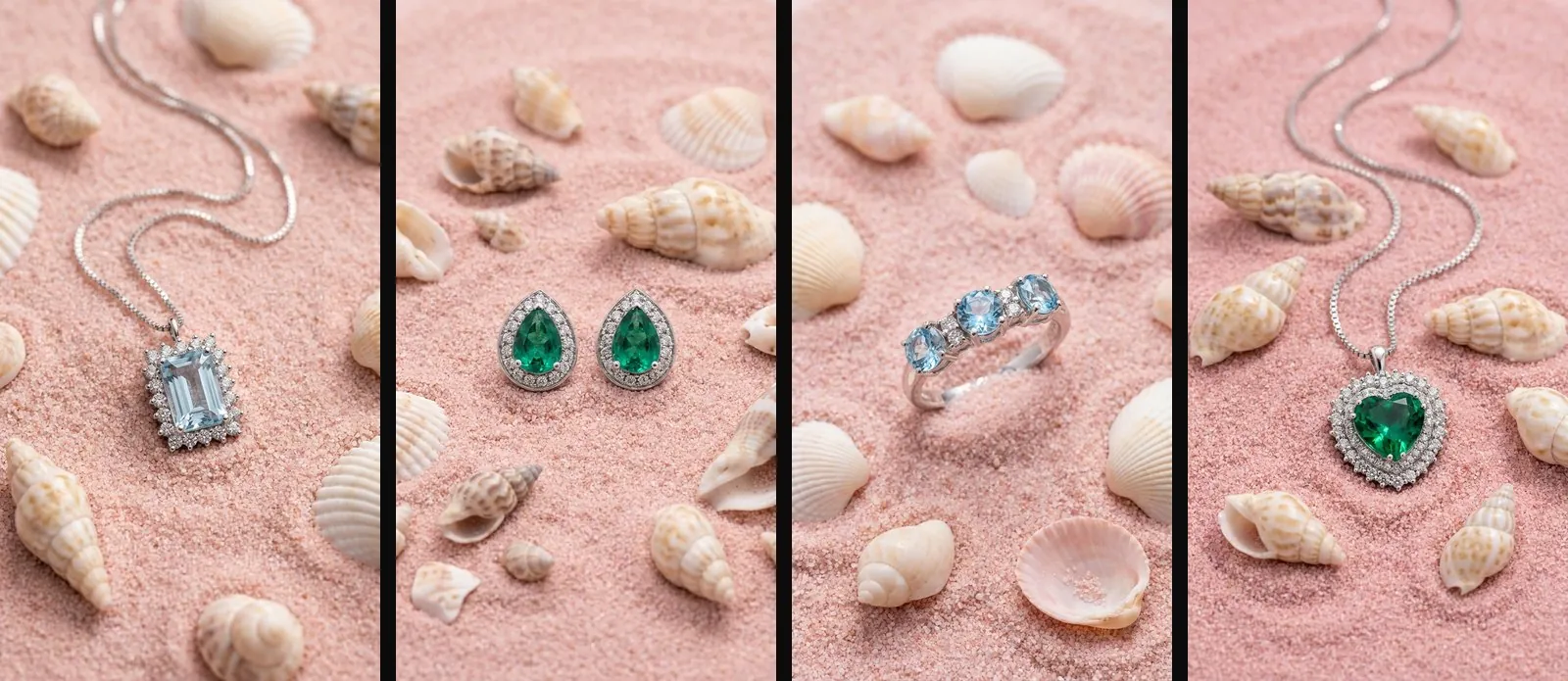
- Catalogs. A long product list is shot under one light and one framing, so the hundredth still life matches the first.
- Collections. A single setting for a whole group of products, built around a reference photo you choose: sand and shells for a summer line, pine and candlelight for December. You stage it once, not once per product.
- Color Variants. The same object in each of its colors, with the pose, the light and the composition held still. Print on demand is where it matters most, because the other colors exist only once someone orders them. Recoloring by hand flattens the surface; here the folds, the shadows and the material survive and only the color changes.
Seedboard was built by photographers and filmmakers who have spent years on set, so it is designed around how brands actually work. The full path, from the first shot to the finished campaign, is described on the how Seedboard works page. If the product also has to be shown worn, the article on ecommerce product photography explains how working with an AI model goes.
Costs and free trial
Every new account gets 1,000 free credits, which can be used without entering a credit card and with no time limit. They let you try the service and judge the quality of the results before spending anything.
Paid plans start at €17 a month, VAT excluded. They include the commercial license. The detail of each plan is published on the pricing page.
What to know before publishing the images
Before using the images it is worth knowing three conditions, also set out in the frequently asked questions.
- Content generated with the free trial is for personal evaluation. Commercial use requires a paid plan or a credit pack, which grant a perpetual, worldwide license to everything that is generated.
- Images generated by artificial intelligence are not covered by exclusive copyright, and similar results could be produced for other users.
- Uploaded photographs are not used to train artificial intelligence models, and are passed to providers only to carry out the generation request.
This describes the service and is not legal advice on the use of images in a specific case. There is more detail in the article on AI-generated images and commercial use.
Frequently asked questions
What is still life in product photography?
It is the photography of an inanimate object, arranged and lit with care, with no people in the frame. In online retail it shows a product on its own, as clearly and as attractively as possible, both on the page where the customer buys and in advertising.
Which types of still life are most common in online retail?
Four. Still life on a white background, for the page where the customer buys; the one in a setting, with the product in context; the one from above, known as a flat lay, for sets and pairings; and the textured one, with the product resting on a surface that echoes its world, such as wood, marble or fabric.
How much does a studio still life cost?
A live product shoot costs roughly 500 to 5,000 euro, plus preparing and shipping the products. With Seedboard a still life is generated with artificial intelligence from €17 a month, VAT excluded, and every new account gets 1,000 free credits to try the service.
How do you get a still life with AI on Seedboard?
You upload the images of the product and show the style you want, with a reference image or a description. Seedboard generates a first photo and, once it is approved, the other angles are generated from it, consistent in light, background and style.
Can every product in a catalog get the same still life?
Yes. The Catalogs feature shoots many products with the same light and framing, Collections photographs several products in one setting on the same theme, and Color Variants reproduces the same product in every color with identical pose, lighting and composition.